

The high-rise industry of architecture and design is a high-risk one. A misunderstood floor plan, a logistical error, or a crude oversight can pretty much flush hundreds of thousands of dollars down the drain. If you’re not careful, substandard architecture can result in injury and harm.
As such, the architecture firm you choose to partner with for your project guides you through the winding world of sketches, floor plans, and permits. Just as a parent entrusts their child to only the best nanny, project developers should entrust their project to the best, most reliable architecture firms in Singapore.
In our years of working with fellow architects and engineers, Ming Architects has seen it all. So we’ve compiled crucial, bright red flags to look out for. Don’t go any further, ‘cause if you do, these common pitfalls won’t mean well for your project or your pocket.
Key Takeaways
- Licensing is non-negotiable. Only BOA-registered firms can legally provide architectural services in Singapore.
- Check for proper documentation. Ask for ACRA registration and the architect’s practising certificate.
- Avoid vague proposals. Missing details in scope or pricing often lead to hidden costs later.
- Cheap doesn’t mean efficient. Unrealistically low quotes often indicate that corners will be cut.
- Good communication = fewer headaches. Choose firms that respond promptly and keep you updated.
Why Getting the Right Firm Matters (Especially in Singapore)

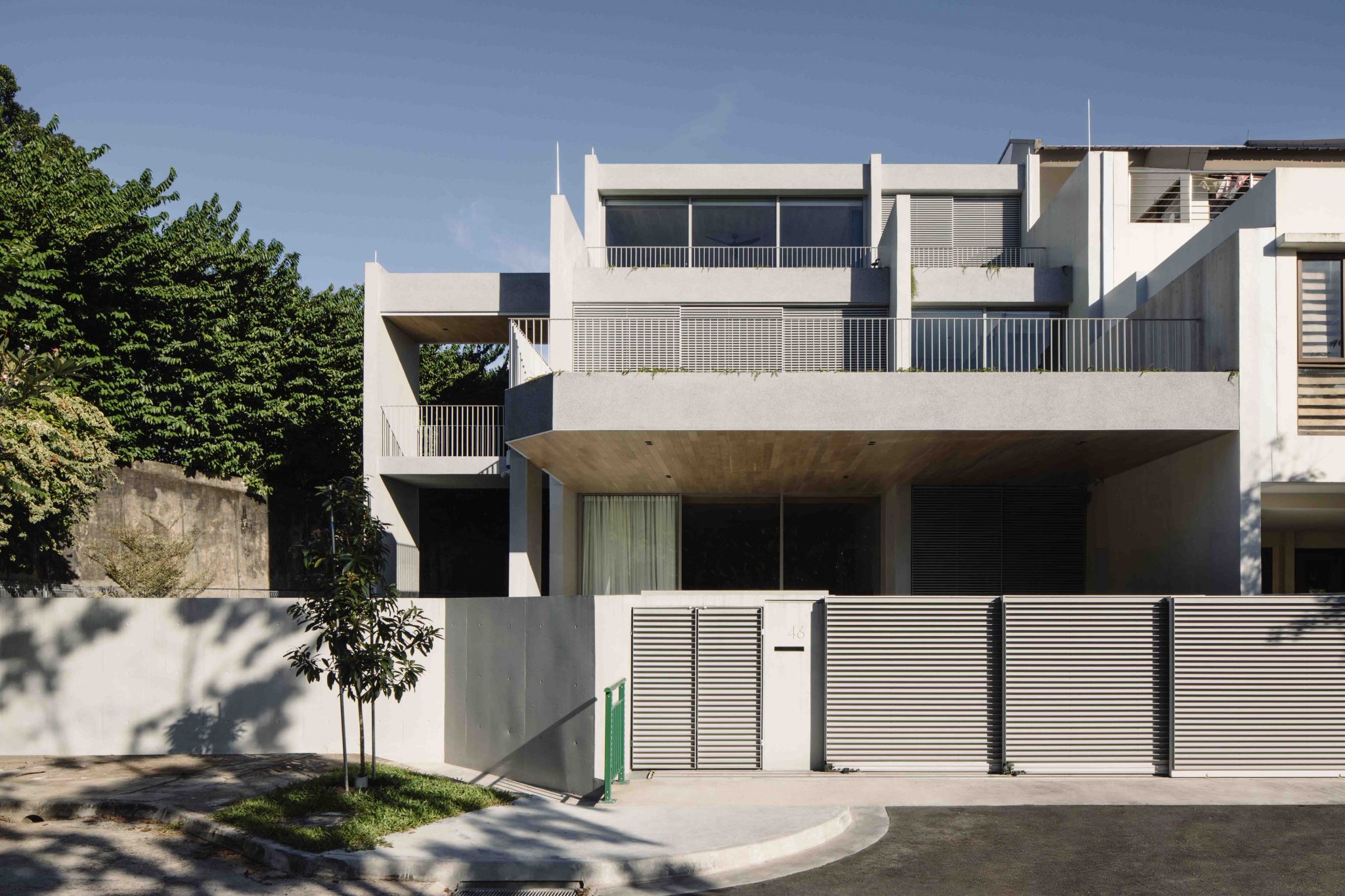
Source: https://mingarchitects.com/wp-content/uploads/2020/07/Ming-Architects-Merryn-Ave-1-web-2048×1365.jpg
Your home is not just a building. It’s where your family lives, grows, and dreams.
Whether you’re planning a full build for a landed home or tearing down a structural wall to get a more open layout, the architecture and design team you pick can make or break your entire experience.
You want functional layouts, premium finishes, smart home integrations, and a process that’s transparent from start to finish.
When you hire an architecture firm, you’re trusting them with your hard-earned money.
Also, you’ll be working quite closely with them. You’ll be negotiating project scope, payment plans, tackling labour costs, material costs, and unexpected expenses, as well as managing permit approvals, variation orders, renovation delays, and more.
Avoid These Red Flags When Choosing Architecture Firms in Singapore
Before you commit, watch out for these red flags.
1. Not Licensed with the Board of Architects

Source: https://www.parliament.gov.sg/docs/default-source/default-document-library/s-539of2020.pdf
In Singapore, only firms licensed with the Board of Architects (BOA) can legally call themselves an architectural practice. This is outlined in Part 3 of the Architects Act 1991.
Governing bodies responsible for greenlighting a construction project, particularly the URA and BCA, may reject a project’s construction if plans and sketches are submitted by a non-registered architecture firm. A registered design firm, on the other hand, won’t have any issue with permit approvals.
In addition to your project’s anomalous compliance, a non-registered firm may also cut corners on material costs, project scope, and labour costs, as they aren’t being closely monitored by the BOA.
As such, you also won’t have any legal recourse against the unregistered design firm since they aren’t recognised as a legitimate firm rendering architectural services.
A registered architecture firm is:
- Closely monitored by the BOA. The BOA monitors registered firms with practising certificates to ensure that they maintain compliance.
- Carries Professional Indemnity (PI) Insurance. This is a form of liability coverage that protects clients if the architect commits an error, omission, or negligent act that results in loss or damage. This requirement is outlined in Section 24 of the Architects Act. Failure to comply means revocation of the firm’s license, as stated in Section 26A.
- The board is composed of registered architects. A practising firm providing architectural services in Singapore may have its practising license revoked if the board isn’t maintained by a “prescribed proportion” of registered architects, as mandated by Section 20(1)(c) of the Architects Act. This means a firm with no architects relying on outsourced or subcontracted architects won’t suffice.
So if a design firm isn’t on the BOA register, it’s a major red flag. In more ways than one. Always verify their licence. Reputable firms won’t hesitate to show you their credentials.
2. Don’t Have the Proper Documentation

Any self-respecting firm would pass itself off as “official” and “registered.”
This is where you should request the necessary business documentation. These are irrefutable proof of the design firm’s legitimacy.
Legitimate architecture firms should be able to provide:
- An ACRA Business Profile showing they are a registered company in Singapore.
- A valid BOA Licence to show they are recognised by the Board of Architects.
- The Practising Certificate of the registered architect leading your project.
No, an online course completion certificate on interior design won’t suffice.
If they dodge your requests or provide incomplete documents, take it as a warning sign.
3. Lack of a Strong Portfolio & Track Record

Source: https://mingarchitects.com/work/
One of the easiest ways to vet an architecture firm is to look at its previous work.
If they can’t show you completed projects of similar property types (landed houses, luxury residences), that’s a red flag.
- If a firm only shows glossy renders or concept drawings but no real photos of completed homes, you don’t know how well they execute in reality.
- If they avoid giving client referrals or site visits to past clients, that’s suspicious.
- Be especially wary if their portfolio lacks projects in Singapore. Local industry standards and construction practices differ from international ones.
A firm with a solid portfolio and reputation gives you confidence that its design ideas can actually be built.
4. Overly Generic Proposals
If you get a vague proposal and quote without itemised tasks, that’s a red flag.
A professional architecture firm, or even an interior design company, should list:
- Scope: what exactly they’re responsible for (e.g. structural design, interior design services, landscaping, smart systems).
- Payment terms: When do you pay, and what amount payable triggers the next stage of the project?
- Material brands or quality levels (e.g. quartz, engineered stone, luxury timber, etc.) should be included in the quote.
- Allowances for hidden costs, such as contingency or variation orders.
If it’s all “TBD later,” you’re putting too much trust in them without protection. Many disputes stem from confusion over what’s included and what isn’t.
5. Unrealistically Low Fees or Bids
If a firm quotes far below the market rate, don’t celebrate.
Raise an eyebrow.
- It might indicate they intend to cut corners or use lower-quality materials later to recoup costs.
- They may underestimate labour costs or overlook unexpected costs, such as regulatory changes, structural reinforcement, or variation orders.
- Ultra-low bids often lead to change orders and cost overruns.
To compete in the construction market, some firms may “undercut” their competition by making their proposal seem financially attractive on paper.
In doing so, they may be omitting some crucial considerations, such as those listed above, that you’ll have to pay for later.
A good design firm should explain why their fees are at a certain level, and you should compare a few firms to calibrate what’s reasonable.
6. Poor Communication & Unresponsive Behaviour

Source: https://www.shutterstock.com/image-photo/dhaka-bangladesh-05-may-2025-close-2623036745
Clear, timely communication is essential in any building project. If a firm takes weeks to reply, avoids answering questions directly, or leaves you in the dark, expect those problems to worsen once the project starts.
- Avoid firms that take too long to respond. While it’s understandable, inevitable even, that you’re not the architecture firm’s only client, that’s no excuse for the firm to be unresponsive. Especially since each of these clients has their expected turnarounds.
- If you’re constantly unsure of whom you should coordinate with, that’s a red flag. Should you direct all concerns to your project manager or to the architect? If you have to send crucial communication to both of them to ensure receipt, then they may not be very efficient communicators.
In addition, you should be given timely updates on the project’s progress. If the firm learned that the project needs to undergo a renovation process or that it incurred unexpected costs, you should know about it.
These unprecedented scenarios will happen in the business of construction and design. So it’s only proper that your partnered firm has the due diligence to uphold timely communication.
7. Overreliance on External Sub-Contractors Without Oversight
It’s normal for design or architecture firms to outsource or hire external specialists (e.g. structural engineers, M&E, HVAC, external sub-contractors).
But you should be cautious if:
- They refuse to name or vet subcontractors.
- They don’t take responsibility for coordinating external subs, so if the external sub does poor work, it’s your headache.
- There is no clarity about who is responsible for scheduling, quality control, or warranty for subcontracted parts of the work.
A trustworthy firm should supervise and coordinate all trades transparently.
8. No Clear Mechanism to Handle Variation Orders or Changes
In any real renovation or build, you’ll inevitably have changes.
Maybe you want a different tile, or perhaps you want to change a wall layout. That’s fine. However, the firm should have a straightforward means of documenting client-requested changes.
Variation orders maintain a record of project scope changes that have been mutually agreed upon. It also acknowledges changes outside what was clearly defined in the renovation contract, leaving no ambiguity in the final outcome and total cost.
Proper documentation, especially in an industry as high-cost as construction, is paramount to the project’s success.
If a firm says “we’ll deal with variations later” without a formal process, you risk costly disputes.
9. High Staff Turnover or Unstable Firm Structure
A consistent point person is crucial to your project’s completion.
Constantly changing your appointed project manager could lead to delays and setbacks, as every new project manager would have to catch up with the previous one’s notes and progress reports.
So it might sound bizarre, but a toxic company culture with a high staff turnover could be detrimental to your project.
In addition, a hair-tearing culture could also be indicative of an underlying, more concerning issue with the renovation firm’s management. Such a culture could result in more frequent oversights and errors, potentially setting the project’s completion back by a considerable amount of time.
Real-Life Example: What Could Go Wrong
Imagine you engaged a small firm for your residential project. The initial quote looked affordable, the designer was friendly, and you liked their render.
However, as work started:
- They didn’t disclose that structural beams needed reinforcement. Your variation orders costs soared.
- Because there was no interim inspection, waterproofing failed behind tiles. Leaks appeared, compromising the home’s livability.
- Their subcontractor delivered shoddy work for cabinetry, and the main firm disowned responsibility.
By the time you realised the mess, you were halfway paying, halfway stuck. There’s no choice now other than to “get it over with.”
This is why red flags matter.
Final Tips When Interviewing Architecture / Interior Design Firms
1. Ask to see work of the same property type (bungalows, landed residential, etc.).
2. Request references. Call past clients to ask about delays, cost overruns, and quality.
3. Ask for a complete contract draft with a payment schedule, penalty clauses, and a variation clause.
4. Test their responsiveness. The first few interactions are telling.
5. Visit their current sites to observe how they manage on-site work.
Consult With an Architecture Firm Now!
You won’t likely catch red flags based solely on the website or social media page. You’ll need to consult with architecture firms to identify any of these red flags.
In the event that you’ve found a “green flag” firm, that’s when you know you’re off to a good start with building your dream home.
Consult with a registered architecture firm with industry experience now! One that values transparency and communication. Get in touch with Ming Architects and turn your dream into a reality.
Frequently Asked Questions
How Can I Tell If a Firm is Licensed?
Visit the BOA website and search their register of architects. The firm and architect should appear there with a valid licence number.
Why Should I Worry About Low Fees?
Low bids may sound great, but they often hide extra costs later or reflect poor-quality materials and workmanship.
What Happens If I Hire an Unregistered Firm?
Your project could face permit rejection, lack of insurance coverage, or even safety issues due to non-compliance. You also won’t have the legal protection you otherwise would have with a registered firm.
How Can I Protect Myself During the Project?
Always request written contracts, variation order procedures, and regular progress updates.

Comments are closed.