A spreading ceiling stain, peeling paint or damp wall is easy to recognise. The difficult part is working out where the water actually entered the building.
That distinction matters when arranging waterproofing in Singapore because the visible symptom may be some distance from the original defect. Water can migrate along concrete slabs, follow joints, pass through cracks, move behind finishes or enter through an external wall before finally appearing indoors.
Treating the stain instead of the source is one reason leaks sometimes return after apparently successful repairs.
Singapore’s climate adds to the challenge. The Meteorological Service Singapore describes the country as having abundant rainfall, high temperatures and high humidity throughout the year. The 1991-2020 long-term mean annual rainfall is 2,113.3 mm, spread across an average of 171 rain days, with particularly wet conditions typically occurring from November to January.
That does not mean every damp patch requires a complete waterproofing overhaul. It means exposed roofs, walls, wet areas, balconies and other building elements need appropriate water-management systems, and defects should be diagnosed before a repair method is chosen.
For homeowners, MCSTs and commercial property managers, a reliable waterproofing contractor should be able to connect three things clearly:
the symptom, the likely source and the proposed repair.
That is more useful than promises of “guaranteed results” made before the property has even been inspected.
Start With the Source: Not Every Leak Is a Waterproofing Failure
Water ingress is often treated as one problem when it can actually come from several very different sources.
A damp ceiling could be caused by a failed bathroom membrane in the unit above. A stain near an external wall could originate from façade cracks rather than the roof. A roof leak may involve failed flashing even though the main waterproofing membrane remains sound.
Plumbing leaks can also resemble waterproofing problems.
This is why diagnosis comes first.
A proper assessment may consider rainfall patterns, the location of the staining, surrounding wet areas, existing membranes, cracks, roof penetrations, drainage, sealants and previous repairs.
The contractor should then explain why the evidence points towards one source rather than another.
Simply applying a coating over a visible damp area is not meaningful leak diagnosis.
HDB Ceiling Leaks: First Establish Who Is Responsible
HDB properties require particular care because the correct repair route depends on where the water originates.
Inter-Floor Seepage Between Two Flats
HDB explains that ceiling leaks between flats commonly occur when water from the upper flat passes through the concrete floor slab, often because the waterproof membrane and screed in a toilet or bathroom have deteriorated over time.
When repair to the floor or ceiling slab is needed, the upper- and lower-floor owners generally arrange the work together and share the repair cost.
The first step should therefore be discussing the leak with the neighbour above and arranging an inspection to confirm the likely source.
HDB recommends re-screeding as one repair method for inter-floor seepage, involving removal of the floor tiles and screed, application of a new waterproof membrane and waterproof screed, followed by reinstatement of the floor finishes.
Other recognised methods may also be considered depending on the leak.
HDB specifically lists chemical grout or PU injection, Flood Infusion, an Overlaying Waterproofing Membrane System, and nanotechnology waterproofing materials among other possible repair options.
This is important because it shows that there is no single repair method prescribed for every ceiling leak.
Top-Floor HDB Roof Leaks
The responsibility changes when a top-floor flat is leaking because of the block roof.
HDB states that the roof is common property maintained by the Town Council. A top-floor resident who suspects that water is entering from the building roof should therefore contact the Town Council rather than immediately appointing a private contractor to waterproof the roof independently.
Likewise, where leakage originates from other common property, the Town Council may need to be involved.
This distinction is often missing from generic waterproofing articles.
“HDB-Approved Waterproofing Contractor” Is Not a Useful Blanket Term
The original article recommends choosing an “HDB-approved” waterproofing company as though HDB maintains one universal approval specifically for waterproofing specialists.
That is misleading.
For HDB renovation works, flat owners are generally required to use contractors listed in HDB’s Directory of Renovation Contractors and comply with HDB’s renovation rules where the proposed work falls within that framework.
HDB’s technical conditions also specify waterproofing requirements when bathroom or toilet floor finishes are replaced. For example, waterproofing screed and membrane are required before new floor finishes are installed, with the membrane turned up at walls, kerbs and pipes.
However, HDB’s separate ceiling-leak guidance says flat owners may engage a contractor to investigate and repair leaks and even provides a non-exhaustive reference list, while advising owners to conduct their own research.
The better question is therefore:
What HDB requirements apply to the particular work being proposed?
That is more precise than asking whether a company is generically “HDB approved.”
BCA CR13 Registration: Useful, but Understand What It Means
BCA’s CR13 – Waterproofing Installation workhead covers waterproofing of basements, roofs and walls.
That makes CR13 a relevant credential when assessing companies working in the waterproofing field.
But it should not be presented as a universal licence that every contractor must hold before doing any private waterproofing repair.
BCA states that the Contractors Registration System is a national registry used for purposes including public-sector construction tenders, first-level subcontracting on public projects and firms employing construction S Pass or Work Permit holders. BCA’s own CRS guidelines specifically state that registration is not automatically required merely to carry out private-sector construction work, although other regulatory or client requirements may still apply.
In other words, CR13 registration is meaningful supporting evidence about the firm and its registered work category, but it should be understood correctly.
BCA’s e-Directory can be used to check current registration details rather than relying on an old logo shown on a contractor’s website.
Bathroom and Toilet Waterproofing: Hacking Is Sometimes Necessary
One of the strongest selling points used in waterproofing advertisements is “no hacking.”
The appeal is obvious.
Removing bathroom tiles and screed creates noise, dust, downtime and reinstatement work. If a leakage problem can genuinely be repaired without demolition, a less invasive solution may be attractive.
But “no hacking” should be a diagnosis-driven option rather than a promise made before inspection.
HDB’s recommended re-screeding approach for inter-floor seepage includes removing the existing tiles and screed, repairing the affected area, installing a new waterproof membrane and screed and then reinstating the finishes.
That is a relatively invasive repair, but it gives access to the waterproofing layer itself.
A less invasive method may make sense where the underlying substrate remains suitable and the water pathway can be treated effectively without removing the full floor system.
The correct question is not:
“Can you repair this without hacking?”
It is:
“Can this particular defect be repaired properly without hacking?”
That subtle difference protects homeowners from choosing a technique mainly because it is convenient.
PU Injection: Useful for the Right Concrete Leakage Path
Polyurethane injection is frequently used for certain concrete water-seepage problems.
The process involves introducing polyurethane grout into cracks, joints or voids. The material reacts in the affected environment and helps seal the path through which water is travelling.
HDB recognises PU injection as one possible method that owners and contractors may explore for appropriate ceiling-leak situations.
Its role should still be understood correctly.
PU injection is not automatically a substitute for rebuilding a failed bathroom waterproofing membrane.
If a membrane has deteriorated across a large wet area, tiles are loose, screed is damaged or drainage construction is defective, treating one crack from below may not address the wider failure.
Injection works best when the contractor can explain:
- where the water pathway is;
- what material is being injected;
- where injection points will be placed;
- whether the crack or joint is suitable for injection; and
- how the repair result will be assessed afterwards.
The technique should follow the defect rather than the homeowner’s preference for a less disruptive repair.
Flood Infusion and Crystallisation Treatments
Flood Infusion is another less invasive method sometimes discussed in Singapore wet-area waterproofing.
The technique uses crystalline waterproofing compounds intended to penetrate or react within the concrete’s pores and capillary paths, reducing water transmission through the treated substrate.
HDB specifically lists Flood Infusion Method among the additional methods that homeowners may discuss with contractors when resolving suitable inter-floor leakage cases.
Some Singapore contractors also offer it commercially.
For example, Allstar Waterproofing & Services currently publishes Flood Infusion as one of its non-hacking wet-area treatments and also offers PU injection for selected water-seepage problems.
That is useful as a real-world example of available methods, but it should not be interpreted as evidence that Flood Infusion is always preferable to re-screeding.
The condition of the screed, membrane, tiles, drainage and concrete still needs to determine the scope.
Overlay Waterproofing Systems
Another way of reducing demolition is to place a new waterproofing system over existing finishes where conditions allow.
HDB includes an Overlaying Waterproofing Membrane System (OWMS) among the alternative methods that may be explored for ceiling leaks.
The advantage is reduced hacking and reinstatement.
The limitation is that the new system depends on the stability of the surface below it.
Overlaying waterproofing onto loose tiles, unstable screed or a substrate with unresolved movement can simply put a new finish over an old problem.
Before approving an overlay system, ask whether the contractor has checked:
- tile adhesion;
- existing screed condition;
- cracks;
- drainage falls;
- floor-trap detailing; and
- compatibility between the existing surface and the proposed waterproofing material.
A less disruptive solution is only valuable when it still addresses the actual defect.
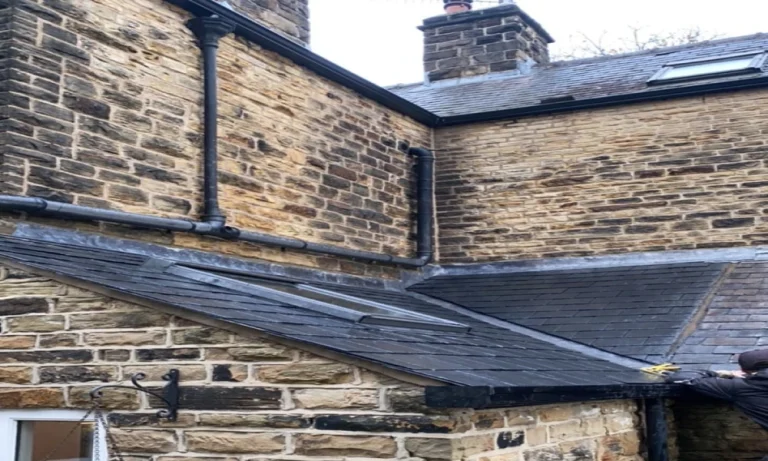
Roof Waterproofing: Drainage Matters as Much as the Membrane
Roof leakage is often treated as a membrane problem, but poor drainage can be equally important.
Flat roofs need appropriate falls so rainwater is directed towards outlets rather than remaining on the surface.
Where water repeatedly ponds in the same area, applying a new membrane without investigating why the water cannot drain properly may leave the new waterproofing under unnecessary stress.
Typical roof inspection points include:
- existing membrane condition;
- open seams or laps;
- cracks;
- parapet details;
- pipe and equipment penetrations;
- gutters and rainwater outlets;
- ponding areas;
- flashing;
- expansion joints; and
- previous repair patches.
The correct waterproofing system then depends on the roof construction and condition.
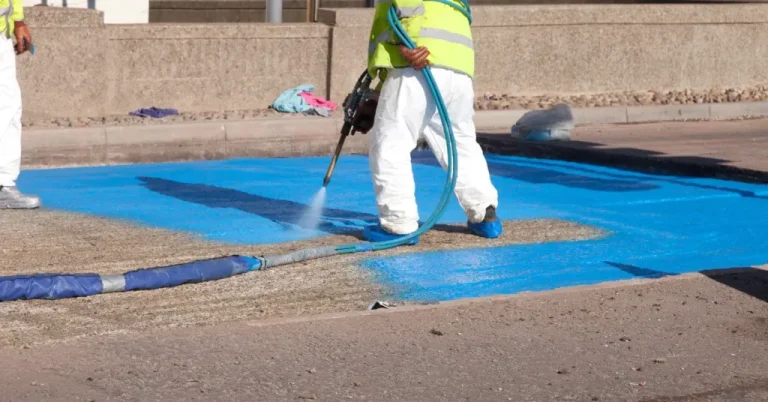
Liquid-applied membranes may suit complex detailing and create a seamless finish across suitable substrates.
Torch-applied bituminous membranes are sheet systems commonly used on appropriate flat-roof applications.
Metal and tiled roofs require different approaches again.
The important point is that “roof waterproofing” should not be treated as one standard coating applied to every roof.
External Wall Seepage Is Not the Same as a Roof Leak
Water entering through an external wall can create damp patches that look similar to roof leakage.
Wind-driven rain may enter through cracks, failed sealants, construction joints or defects around façade openings.
During Singapore’s heavy thunderstorms and monsoon conditions, rain can reach façade areas that remain relatively dry during ordinary showers. Singapore records more than two metres of average annual rainfall, with many rain events accompanied by thunderstorms.
A contractor investigating a high-level internal stain should therefore consider both roof and façade paths.
If the façade is the actual source, recoating the roof does not solve the problem.
External wall work may also require scaffolding, mobile elevated work platforms or rope access depending on the building.
That introduces additional safety and access considerations that should appear clearly in the quotation.
Basements and Below-Ground Leakage
Basement waterproofing differs from roof waterproofing because water pressure can act against the structure from the surrounding soil.
Leakage may occur through cracks, joints, penetrations or defects in the original waterproofing system.
Depending on access, the contractor may need to work from the water-entry side or manage the leakage internally using injection or other repair methods.
Basement work therefore requires a clearer understanding of water movement than simply applying waterproof coating to the visible damp wall.
If leakage is associated with significant cracking or structural deterioration, professional engineering advice may also be necessary.
Balconies, Planter Boxes and Other Exposed Areas
Balconies and planter boxes combine exposure to rainfall with drainage and waterproofing details.
Common problems can develop around floor traps, wall-floor junctions, penetrations and cracked finishes.
Water trapped beneath tiles may migrate laterally before appearing indoors.
Planter boxes can be particularly difficult because they expose waterproofing to continuous moisture and make inspection harder once soil and landscaping are in place.
Repair options may include localised sealing, injection, overlay systems or more extensive removal and reconstruction depending on what has failed.
Again, there is no reason to assume that “no hacking” or “full hacking” is automatically the correct solution before assessment.
Spalling Concrete Is Not Simply a Waterproofing Problem
Water ingress can contribute to concrete deterioration, but waterproofing and concrete repair should not be confused.
HDB explains that spalling concrete occurs when steel reinforcement within concrete corrodes. The expanding rust can cause the surrounding concrete to crack and break away.
Where spalling is present, the affected concrete and reinforcement may require direct repair.
Simply painting waterproof coating over deteriorated concrete does not restore the damaged substrate.
For minor HDB spalling, HDB describes removing loose material, cleaning corrosion from exposed reinforcement, applying anti-rust protection and patching the concrete with suitable repair mortar. Larger areas should be addressed promptly by a contractor.
The waterproofing contractor should recognise when the problem requires concrete repair rather than pretending every symptom falls within the same scope.
Thermal Imaging and Leak Detection: Useful Tools, Not Proof by Themselves
Diagnostic technology can help locate moisture patterns, temperature differences or concealed areas requiring further investigation.
But equipment should support judgement rather than replace it.
A thermal image may indicate an unusual temperature pattern, for example, but the contractor still needs to interpret whether it is actually related to moisture and whether the suspected route makes sense in the building.
Likewise, moisture meters and water testing can add useful evidence when applied appropriately.
The homeowner should focus less on whether the contractor owns a particular gadget and more on whether the investigation produces a coherent diagnosis.
Ask:
What did the test find?
How does that finding connect to the visible leak?
How does the proposed repair address that route?
A colourful thermal image without those answers has limited value.
“Guaranteed Results” Should Be Treated Carefully
Waterproofing contractors frequently use guarantees and warranties as trust signals.
A written warranty can be useful, but it does not mean that every future damp patch automatically qualifies for a free repair.
Warranty terms normally depend on the specific work carried out.
A contractor that injects one identified crack cannot reasonably guarantee every other unrelated water path in the building.
Likewise, a roof membrane warranty may exclude damage caused later by third-party works, structural movement or defects outside the treated area.
Before signing, read the warranty and confirm:
- the covered area;
- the repair method covered;
- warranty duration;
- exclusions;
- maintenance requirements;
- whether labour and materials are both included;
- what happens if leakage reappears; and
- whether inspection is required before a claim is accepted.
Duration alone is not enough.
A clearly written one-year warranty may be more meaningful than a vague ten-year promise with broad exclusions.
Contractor Selection: 8 Checks That Matter More Than Advertising
Choosing a waterproofing contractor in Singapore becomes easier when the decision is broken into practical checks.
1. Can the Contractor Explain the Source?
The contractor should be able to connect the symptom with a plausible water-entry path.
If the only explanation is “your waterproofing has failed,” ask for more detail.
2. Does the Proposed Method Fit the Defect?
PU injection, re-screeding, Flood Infusion, overlay membranes and roof coatings are not interchangeable.
Ask why this method is suitable for this particular leak.
3. Is BCA Registration Relevant and Current?
CR13 registration is useful evidence for waterproofing specialists, particularly where CRS requirements apply.
It should be verified through BCA’s current directory rather than assumed.
At the time of this review, Allstar Waterproofing & Services Pte Ltd is listed by BCA under CR13 Waterproofing Installation, Grade L1, with the directory showing an expiry date of 1 July 2027.
That is a factual credential readers can verify independently.
It should not, however, be described as proof that BCA guarantees the company’s workmanship.
4. Do HDB Rules Apply?
For HDB flats, determine whether the job is private ceiling-leak repair, renovation work requiring a DRC contractor, or work involving common property and the Town Council.
Do not treat every case as identical.
5. Is the Scope Written Clearly?
A useful quotation should identify the area being treated, repair method, preparation, reinstatement, access equipment and significant exclusions.
6. What Does the Warranty Actually Cover?
Request the written terms rather than relying on the headline duration.
7. Are Safety and Access Requirements Addressed?
Roof and façade repairs can involve work at height.
The quotation or work plan should explain how difficult access will be managed rather than introducing an unexpected charge after the job starts.
8. What Happens If the Leak Returns?
Follow-up arrangements should be clear before work begins.
A responsible contractor should explain how it determines whether a returning symptom relates to the original repair or a different defect.
Allstar as a Contractor Example: Keep Company Claims Separate From Industry Standards
A guest article can reference a contractor without turning every company statement into an independent fact.
Allstar currently states that its team has 20+ years of industry experience and has serviced more than 3,000 residential, commercial and industrial properties. Its published wet-area and roof pages also advertise free on-site inspection, no-obligation quotations and a one-year repair warranty, with extended warranty options subject to discussion.
Those are company-published service claims.
They are useful when a reader is comparing providers, but they should be presented as Allstar’s current terms rather than as rules that every Singapore waterproofing contractor follows.
The independent BCA directory adds a separate piece of evidence: Allstar’s current CR13 L1 registration can be checked outside the company’s own website.
That separation between regulatory information and company claims strengthens the editorial credibility of the article.
How Much Does Waterproofing Cost in Singapore?
There is no single meaningful Singapore-wide waterproofing rate.
Bathroom repairs, PU injection, roof membranes, external-wall work and basement leakage involve different materials, labour and access requirements.
Costs can vary according to:
- area being treated;
- location of the leak;
- accessibility;
- required investigation;
- membrane or repair system;
- substrate condition;
- hacking and disposal;
- reinstatement;
- scaffolding or rope access;
- number of visits; and
- warranty scope.
This is why one company’s advertised rate should not be presented as the market price for waterproofing generally.
A site inspection is often more useful for complex leakage because it allows the contractor to understand the scope before pricing.
But even here, avoid assuming that a free inspection is an industry requirement.
Some companies may offer complimentary assessment, while others may charge for specialist leak investigation.
Compare what is actually included.
Comparing Waterproofing Quotations Fairly
Two quotations that show the same headline description may cover very different work.
One may include hacking, disposal, waterproofing, screed and tile reinstatement.
Another may only include applying a coating to the existing finish.
A roof quotation might exclude repair of ponding areas or replacement of flashings.
An external-wall quotation may exclude access equipment.
Before comparing prices, line up the scopes.
A useful quotation should answer:
Which area is being treated?
What material or system is being used?
What preparation is included?
Will any finishes be removed?
Who reinstates them?
Is access equipment included?
How many visits are expected?
What is excluded?
What warranty applies?
The cheapest quotation is not necessarily poor value, but it should be cheap for a clear reason rather than because half the work is missing.
Hacking Versus No-Hacking: A Better Decision Framework
The original draft presents no-hacking methods as inherently cheaper, faster and preferable.
That is too simplistic.
A Less Invasive Method May Suit:
A localised crack or concrete pathway that can be injected effectively.
A wet area where an approved alternative treatment can address the identified water path.
A stable existing finish suitable for an overlay waterproofing system.
Hacking May Be More Appropriate When:
The existing membrane has failed extensively.
Tiles or screed are loose or damaged.
Drainage falls are defective.
The substrate itself requires repair.
The affected construction needs to be exposed to determine the full condition.
HDB’s own guidance is helpful here: it recommends re-screeding for common inter-floor leakage, while also recognising PU injection, Flood Infusion, overlay membranes and other approaches as alternatives for suitable circumstances.
That is a much more balanced way to frame the choice.
How Long Should Waterproofing Last?
There is no universal lifespan for “waterproofing.”
A membrane’s performance depends on the exact product, preparation, substrate, installation, exposure, movement, drainage and maintenance.
A liquid-applied roof coating and a wet-area membrane beneath bathroom tiles operate under very different conditions.
Manufacturer technical data may provide expected performance or warranty information for individual systems.
But statements such as “waterproofing lasts 20 years” should not be published unless the claim refers to a specific product under defined conditions.
Contractor workmanship warranties are also different from material life expectancy.
A system may remain serviceable long after the contractor warranty expires, while poor installation can also cause premature failure.
Can Waterproofing Be Done During Singapore’s Rainy Months?
Singapore receives rain throughout the year, so waterproofing contractors cannot simply avoid a fixed “rainy season.”
However, many products require appropriate substrate moisture levels and weather conditions during preparation, application and curing.
Rain during certain stages can affect adhesion or curing.
Contractors therefore need to plan work around actual forecasts and the manufacturer’s technical requirements.
The wettest period generally occurs from November to January during the Northeast Monsoon, but there is no completely rain-free season.
For exposed roof or façade work, ask how the contractor plans to protect unfinished areas if rain arrives before the system has cured.
Maintenance After Waterproofing
Waterproofing is easier to maintain when building owners know what system was installed and where.
Keep copies of:
- quotations;
- product information;
- drawings or treated-area descriptions;
- photographs;
- warranty documents; and
- previous repair reports.
For roofs, periodically check drains, gutters, membrane edges, joints and areas around later-installed equipment.
A perfectly installed membrane can be damaged if another contractor later drills through it to install equipment and does not reinstate the waterproofing properly.
Bathrooms also benefit from proper maintenance.
HDB advises using non-corrosive detergents in toilets and bathrooms to reduce deterioration of the waterproof membrane and screed over time.
Preventive care does not eliminate every future leak, but it can reduce avoidable deterioration.
Frequently Asked Questions
Do All Waterproofing Contractors in Singapore Need BCA CR13 Registration?
No. CR13 is BCA’s waterproofing-installation workhead within the Contractors Registration System, covering waterproofing of roofs, walls and basements. CRS registration is relevant for purposes including public-sector work and firms employing construction work-pass holders, but BCA does not state that every contractor performing private waterproofing must hold CR13 solely because it is doing private-sector work.
Do HDB Owners Need an HDB-Approved Waterproofing Contractor?
It depends on the work. HDB renovation works are subject to HDB renovation requirements and, where applicable, use of contractors from the Directory of Renovation Contractors. For ordinary ceiling-leak repairs, HDB also states that flat owners may engage a contractor privately. The correct requirement depends on the repair scope.
Is No-Hacking Waterproofing Effective?
It can be effective for suitable defects. HDB recognises methods including PU injection, Flood Infusion and overlay waterproofing among possible ceiling-leak solutions. However, hacking and re-screeding may be more appropriate where the membrane or screed has failed extensively.
Who Pays for an HDB Ceiling Leak Between Two Flats?
Where repair to the floor or ceiling slab between two flats is required, HDB states that the upper- and lower-floor owners generally arrange the repair and split the costs. If leakage comes from the top-floor block roof, the roof is common property and the Town Council should be contacted.
Is PU Injection the Same as Waterproofing the Whole Bathroom?
No. PU injection is used to seal suitable cracks, joints or water pathways in concrete. It does not automatically replace a deteriorated waterproof membrane throughout an entire wet area. The contractor should first identify what has failed.
Should Every Leak Be Investigated With Thermal Imaging?
No. Thermal imaging can be useful in selected investigations but is not required for every leak. Visual inspection, moisture testing, water tests and knowledge of building construction may also be appropriate. The contractor should explain how any diagnostic tool supports the suspected leak path.
What Warranty Should a Waterproofing Contractor Give?
There is no universal statutory warranty length that applies to every waterproofing repair. Compare the written duration, covered area, exclusions and claim process rather than assuming that a longer headline warranty automatically means better work.
Should I Choose the Cheapest Waterproofing Quote?
Not before comparing scope. Check whether each quote includes the same preparation, waterproofing area, repair method, hacking, reinstatement, access work, follow-up and warranty. A lower price may simply cover less work.
Conclusion
Good waterproofing in Singapore begins with diagnosis rather than a product.
A ceiling stain may come from an upper-floor bathroom, roof, external wall, plumbing defect or crack in concrete. Those problems can look similar indoors while requiring completely different repairs.
That is why homeowners should be cautious of contractors who promise “guaranteed results,” “no hacking” or a particular waterproofing system before inspecting the site.
The better process is straightforward: identify the likely source, match the repair method to the defect, understand HDB or BCA requirements where relevant, compare written scopes and read the warranty rather than relying on the headline promise.
For property owners who want professional assessment, Allstar Waterproofing & Services is one Singapore contractor offering wet-area, roof, seepage and related waterproofing work. Its current BCA listing shows CR13 Waterproofing Installation at Grade L1, while the company publishes a one-year repair warranty and inspection-led approach among its service terms. As with any contractor, those details should be reconfirmed for the specific project before work begins.
The most reliable waterproofing solution is not necessarily the newest or least disruptive method. It is the one that clearly addresses where the water is actually coming from.