
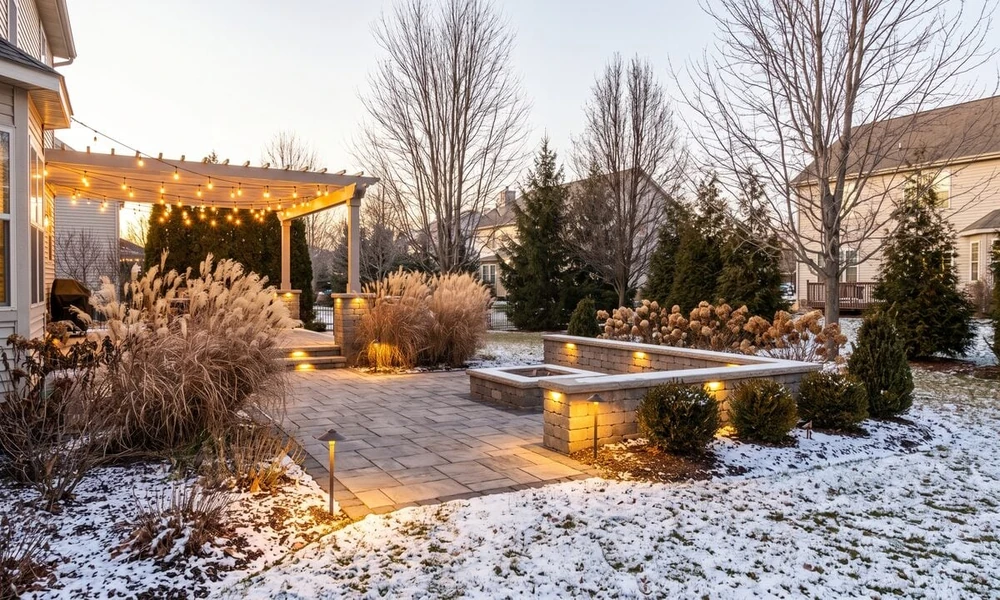
Minnesota yards live two lives. For roughly five months they are buried under snow, plowed piles and road salt, and for the rest of the year they are expected to look like a magazine spread. Most landscape problems that show up in April, such as dead patches, split shrubs and soggy corners, were actually set in motion by decisions made years earlier. Teams like Home & Grounds see this pattern constantly: the best-looking spring yards are the ones designed with winter in mind from the start.
Let’s walk the property from the curb to the back fence and look at where winter does its damage and how smart design prevents it.
Stop One: The Curb and Driveway Edge
This is the front line. Plows throw heavy, wet snow onto the strip beside the street, and de-icing salt rides along with it. Turf and plants here take a beating that the rest of the yard never sees.
- Choose salt-tolerant plants for the first few feet from pavement, such as ornamental grasses, daylilies and certain junipers
- Keep delicate perennials and flowering shrubs well back from the edge
- Mark the boundary with stakes in fall so plow crews and snow blowers know where the lawn begins
- Consider a gravel or paver buffer where the damage repeats every year
Salt is a bigger issue than most homeowners realize. The Minnesota Pollution Control Agency has detailed guidance on smart salting practices that explains how excess salt harms soil, plants and local waterways, and why using less of it often works just as well on your own walkways.
Stop Two: The Foundation Beds
Along the house, snow slides off the roof, meltwater drips from eaves and the ground freezes hard against the foundation. Plants here face crushing loads and heavy moisture swings.
Plant with the roofline in mind. Avoid fragile, upright shrubs directly beneath long eaves, where sliding snow can snap branches. Low, flexible plants that bend and bounce back, like spirea, dwarf dogwood and sedges, handle the load far better.
Think about slope. The soil should fall away from the house, never toward it. Water pooling at the foundation freezes, expands and pushes against walls and window wells. A few inches of regrading or a simple drainage swale can prevent years of headaches.
Mulch smartly. A layer of two to three inches insulates roots and moderates freeze and thaw cycles, but keep it pulled back from stems and siding to avoid rot and pests.
Stop Three: The Lawn
A Minnesota lawn has a short window to recover from winter, so its health going into the freeze matters enormously.
The biggest winter lawn threats are:
- Snow mold, which appears as gray or pinkish matted patches after the melt, usually where leaves or long grass sat under snow
- Compaction, caused by plow piles and foot traffic over frozen turf
- Vole damage, which shows up as winding trails of chewed grass under the snow
- Salt burn, concentrated along walks and drives
You can lower the risk with a few habits. Rake leaves before the first lasting snow, mow slightly shorter on the final cut of the season (not scalped, just tidy), and avoid piling snow on the same patch of lawn every time you shovel. Aeration in early fall relieves compaction and helps roots go into winter strong.
Stop Four: Trees and Large Shrubs
Trees are long-term investments, and winter tests them in several ways. Heavy snow and ice can split branches, rapid temperature swings can crack bark on the sunny side of young trunks, and hungry rabbits and deer chew bark when food is scarce.
- Prune weak, crossing or poorly attached branches during dormancy so they do not fail under load
- Wrap the trunks of young, thin-barked trees in late fall to prevent sunscald and remove the wrap in spring
- Use hardware cloth or tree guards to protect against gnawing
- Water evergreens deeply in late fall, since they keep losing moisture through their needles all winter
Choosing the right species matters as much as protecting the wrong one. Hardy, native or well-adapted trees cope with Minnesota winters far more gracefully than borderline varieties that merely survive.
Stop Five: The Back Corners and Low Spots
Walk to the far edge of the yard in early spring and you will find the truth about your drainage. Where water lingers after the thaw, the soil stays cold, the grass thins and the mud lasts well into May.
Low spots can often be turned into assets. A rain garden planted with moisture-loving natives such as blue flag iris, switchgrass and joe pye weed soaks up runoff, attracts pollinators and looks beautiful. It beats fighting a soggy lawn year after year.
What a Winter-Smart Yard Has in Common
After this walk-through, a clear pattern emerges. Yards that handle Minnesota winters well tend to share a few traits:
- Plants matched to their exact location, from salt-prone edges to snow-shedding foundation beds
- Grading and drainage that move water away from structures
- Clear zones set aside for snow storage, so plow piles do not smother lawns and gardens
- Hardscaping that tolerates freeze and thaw, with proper base preparation under patios and walkways
- A fall routine that sets the property up for the season ahead
A Short Fall Checklist
- Clear leaves from the lawn and beds
- Cut back perennials that tend to collapse and rot
- Apply a final mulch layer around vulnerable plants
- Drain and store hoses and turn off outdoor spigots
- Stake the plow line and mark hidden edges
- Water evergreens and new plantings thoroughly before the freeze
Final Thoughts
Great Minnesota landscapes are not the ones that ignore winter. They are the ones that plan around it. When you think about where the snow will pile, where the water will go and which plants can handle the abuse, your yard stops recovering from winter and starts using it. The result is a property that wakes up healthy in April and holds its beauty well into the fall.

Comments are closed.