
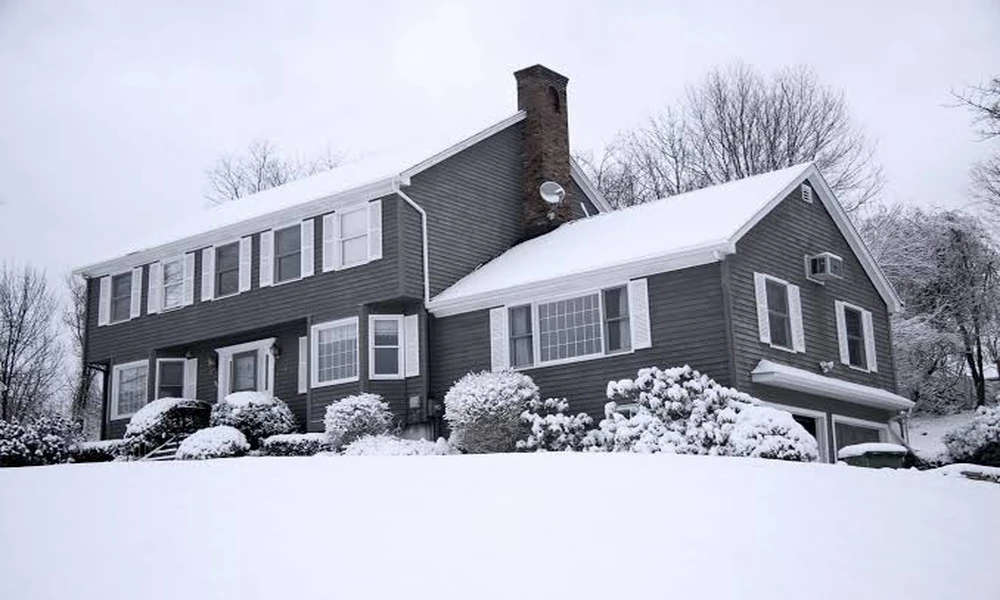
Winter weather does not wait for a roof to be ready. Heavy snow loads, freezing rain, and sustained cold all place demands on a roof that summer weather never does, and small issues that seem minor in October can turn into serious problems by January.
A pre-season inspection, done before the first hard freeze, is one of the most effective ways to catch small issues while they are still inexpensive to fix. Knowing what to actually look for turns a general sense of the roof looking fine into a real assessment.
Why Winter Prep Matters More in Chicago
Chicago winters bring a mix of heavy snow, freezing rain, and rapid temperature swings that put more stress on a roof than a single hard freeze ever could. A roof that handles a mild winter without issue can still struggle when conditions shift quickly from thaw to deep freeze and back again.
This kind of freeze-thaw cycling is what turns a small crack or a loose shingle into a real leak, which is why a roof that looked fine in November can develop problems by February even without a major storm.
Start With the Shingles
Walking the perimeter of the house and looking up at the roofline reveals more than most homeowners expect. Cracked, curling, or missing shingles are the most visible sign that a roof section may not hold up well against the freeze-thaw cycles winter brings.
Granule loss is a subtler warning sign, often showing up as dark patches on the roof surface or granules collecting in the gutters after a rain. Shingles that have lost significant granule coverage are more vulnerable to water infiltration during winter storms.
Check the Flashing Around Roof Penetrations
Flashing around chimneys, vents, and skylights is one of the most common places a roof develops a winter leak, simply because these joints see more movement and stress than the flat expanse of shingles around them.
Gaps, rust, or lifted edges in the flashing should be addressed before winter, since water that gets behind flashing during a freeze has nowhere to go except into the roof deck itself, where the damage is much harder to spot early.
Clear and Inspect the Gutters
Gutters full of leaves and debris cannot move meltwater away from the roofline, which is one of the leading contributors to ice dam formation later in the season. Clearing them before the first freeze is a simple step with an outsized impact.
While clearing debris, it is worth checking that gutters are still securely attached and sloped correctly toward the downspouts, since gutters pulled loose by summer storms will only get worse once ice adds extra weight to the system.
Pay Attention to Valleys and Low-Slope Areas
Roof valleys, where two roof planes meet, collect more water and snow than flatter sections, which makes them more prone to leaks if shingles or underlayment have worn thin. A close look at these areas during a pre-season check is worth the extra few minutes.
Low-slope sections of a roof, common on additions or dormers, drain more slowly by design and are more susceptible to ice buildup, so they deserve the same attention as the main roofline rather than being treated as an afterthought.
Look Inside the Attic
An inspection from inside the attic often reveals more than one from the ground. Daylight visible through the roof deck, damp insulation, or a musty smell are all signs that moisture is already getting in somewhere along the roofline.
Attic insulation and ventilation levels are also worth checking during this step, since a poorly insulated or poorly ventilated attic is one of the main reasons roofs develop ice dams during Chicago winters, regardless of how new the shingles are.
Assess the Roof’s Overall Age and History
A roof’s age matters as much as its current condition. A roof nearing the end of its expected lifespan may look fine during a quick glance but be far more vulnerable to winter stress than a newer roof with a few minor issues.
Reviewing past repair history helps too, since recurring problems in the same area of the roof often point to an underlying issue that a surface-level repair has not fully resolved.
When a Professional Inspection Makes Sense
A homeowner can catch many issues with a careful visual check, but some problems, like deteriorating decking beneath the shingles or flashing that looks fine but is no longer sealed properly, are difficult to identify without training. Scheduling a professional roof inspection before winter closes that gap.
A trained eye can also give a realistic sense of how many more winters the current roof has left, which helps with budgeting for a repair or replacement on a homeowner’s own timeline rather than in the middle of an emergency.
Conclusion
A pre-season inspection is less about finding a major problem and more about catching the small ones before winter turns them into bigger, more expensive ones. Shingles, flashing, gutters, and attic conditions all play a role in how well a roof holds up through the season.
If it has been a while since your roof had a proper look, LEN Roofing’s full range of services includes pre-winter inspections built around exactly this kind of checklist, giving homeowners a clear picture before the cold sets in.

Comments are closed.