
Roofs, siding and gutters are usually sold, installed and repaired as separate jobs, yet rain treats them as one surface. Water that lands on the shingles has to travel across flashing, into gutters, down downspouts and past the siding before it reaches the ground, and every handoff along that path is a place it can slip into the wall instead. In the St. Louis area, where spring storms drop heavy rain in short bursts, hail scuffs every exposed surface and winter brings freeze and thaw cycles, those handoff points take a beating. Most hidden rot in exterior walls starts at one of four of them.
Because the problems sit between trades, they are best handled by a team that works on all three systems at once, and that is what Stars and Stripes Roofing & Exteriors brings to homes across St. Louis, St. Charles and Jefferson County. From its Crestwood office, the crew behind starsandstripesroofingandexteriors.com installs roofs, siding and gutters, and handles inspections and storm damage repairs. Ask for a free estimate that looks at where those systems meet, not just at the shingles.
1. The Eave and Gutter Line
Where to look: the lowest edge of the roof, at the gutter, fascia board and top of the siding below.
The eave is the first handoff, where water leaves the roof and is supposed to drop cleanly into the gutter. Two pieces of metal make that possible. A drip edge along the roof perimeter carries water past the fascia board, and the gutter must sit high and tight enough to catch it. When the drip edge is missing or the gutter hangs too low, water runs down the back of the gutter, soaks the fascia and finds its way behind the top course of siding.
Clogged gutters make things worse. Oak and maple leaves from older St. Louis neighborhoods pack gutters every fall, and overflowing water spills over the front or backs up under the shingles. In winter, an ice dam along the eave can push meltwater upward under the roofing. Peeling paint on fascia, sagging gutters and dark streaks on the siding just below the eave are all early warnings.
2. Where a Roof Meets a Wall
Where to look: anywhere a lower roof runs along the side of a taller wall, such as a garage roof against a two story wall or a porch roof against the house.
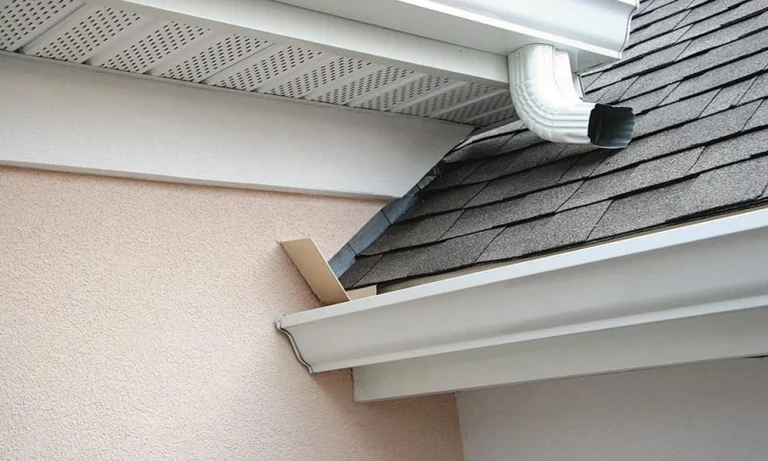
Along these joints, step flashing is woven between shingles and tucked behind the siding to keep water on the roof. The trouble comes at the bottom, where the roof edge ends but the wall keeps going. Without a bent piece called kickout flashing at that spot, water running down the step flashing pours straight into the wall instead of into the gutter.
InterNACHI’s inspection guidance on how kickout flashing diverts runoff away from the wall notes that the damage behind a missing kickout can be severe even when little shows on the surface. Vertical stains below the end of a roof line, soft or swollen siding, and peeling interior paint on that wall are the clues to watch for. On vinyl siding the damage often stays hidden until the sheathing behind it has rotted.
3. Window and Door Heads Beneath the Roof
Where to look: the tops of windows and doors directly below eaves, valleys or short roof sections with no gutters.
Every window and door opening interrupts the siding, and the top of each one needs head flashing that sheds water outward. Openings that sit below a valley or a roof section with no gutter take a concentrated stream of runoff with every storm. If the flashing above them is missing, buried in caulk or sloped the wrong way, water collects on top of the frame and works into the wall.
This spot often gets missed during roof replacement because it belongs to the siding. A homeowner who replaces only the roof may still see water stains around windows, because the roof is now shedding water efficiently onto an opening that was never flashed well. Replacing siding is the ideal time to correct head flashing, since the wall is already open.
4. Downspout Outlets and the Bottom of the Wall
Where to look: the base of each downspout and the lowest course of siding along the foundation.
The final handoff happens at ground level. A downspout that ends right at the wall dumps hundreds of gallons against the foundation during a single storm, and splashback soaks the bottom edge of the siding. Short extensions, crushed elbows and missing splash blocks are common culprits. Siding installed too close to soil or mulch wicks moisture upward and invites insects.
Missouri’s mix of clay soils and heavy rain makes this spot especially important. Extending downspouts several feet from the house and grading soil away from the foundation protects both the siding and the basement. Swollen trim near the ground, peeling paint at the bottom course and damp basement walls under a downspout all point here.
How the Four Spots Compare
| Spot | Roofing part involved | Exterior part involved | Typical repair |
|---|---|---|---|
| Eave and gutter line | Drip edge, starter course | Gutter, fascia, top of siding | Add drip edge, reset gutter pitch |
| Roof to wall joint | Step flashing | Siding, sheathing, house wrap | Install kickout, repair wall layers |
| Window and door heads | Valleys, eave runoff | Head flashing, trim | Correct flashing, add gutters above |
| Downspout outlets | Gutter capacity | Lowest siding course, foundation | Extend downspouts, regrade soil |
Why Storm Season Raises the Stakes
Severe weather tests all four spots at once. NOAA’s National Severe Storms Laboratory explains that wind driven hail can tear up siding and break windows, and the same storms bend gutters, crack flashing and knock granules off shingles. After a major hail event, homeowners often focus on the roof alone, but dented gutters, cracked vinyl and loosened flashing at these junctions can let water in long after the roof has been replaced.
Fiber cement siding, seamless gutters sized for heavy downpours, and impact resistant shingles are all growing in popularity across the region for that reason. Whatever the materials, a home stays dry when the roof, gutters and siding are treated as a single path for water rather than three separate projects, and when each handoff along that path is flashed, sealed and pitched to send water away from the wall.