
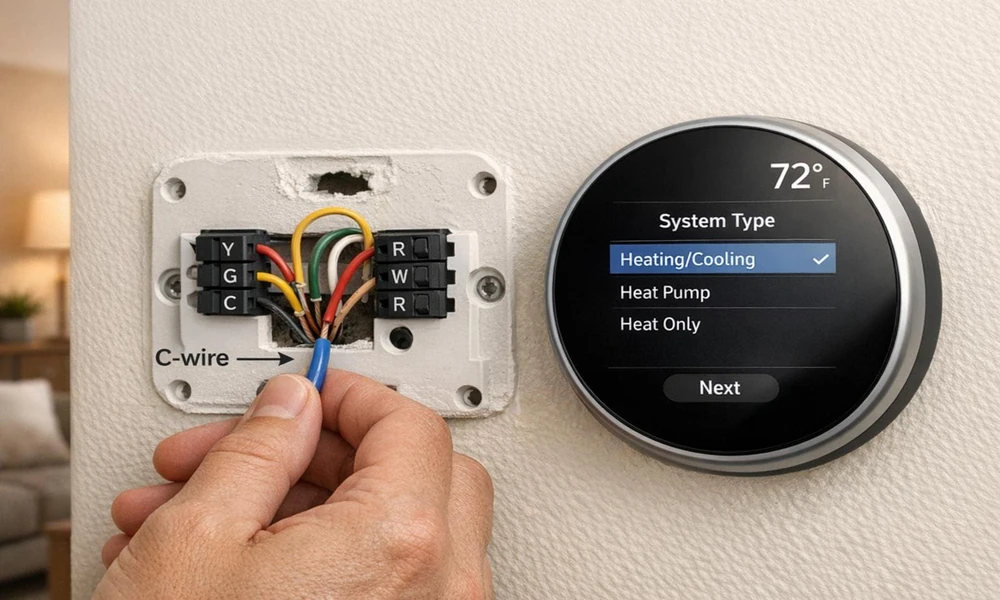
Picture a typical split-level in Dayton that just went through a big change. Last spring, the air conditioner out back stopped working. Instead of buying the same condenser again, the owners put in a heat pump and kept the gas furnace they already had in the basement. Now the house has two ways to make heat, and the thermostat on the hallway wall chooses which one to use every time it calls for warmth. People call this setup dual fuel or hybrid heating. The easiest way to see whether it fits your home is to follow one house through a full Ohio year.
Before the cold arrives, it helps to know how these systems get matched to a house. A local residential team like Advanced HVAC Solutions usually starts by looking at the furnace already in place. If it still has solid years left and the cooling equipment is the part giving out, they’ll suggest a hybrid pairing. If the furnace is the weak link, they’ll point toward other options. They put the cost in writing before any work begins and answer emergency calls day and night across the Miami Valley, which matters in a region where a mild week can turn into a hard freeze overnight.
October, When the Heat Pump Earns Its Reputation
The first chilly mornings of fall are when a heat pump really shows its value. It doesn’t burn anything. It pulls heat from the outdoor air and moves it inside, running the same refrigerant cycle as an air conditioner in reverse. When it’s in the 40s or 50s outside, it can provide two to three times as much heat as the electricity it uses. In October, the furnace hardly runs at all. The gas meter barely moves, while the outdoor unit runs in long, low cycles.
The air from the registers feels different than it did with the furnace. A gas burner produces air that feels hot to the touch. A heat pump sends out air that feels warm, often around the mid-90s Fahrenheit, and it runs longer to keep the house at the set temperature. Some homeowners worry something is wrong the first week. Nothing is wrong. The house stays just as comfortable. The heat simply comes in more gradually.
November and the Number That Runs the Show
As the first real cold front comes down from the Great Lakes, the thermostat starts using a setting most homeowners never think about, called the switchover temperature. Above that point, the heat pump handles heating. Below it, the compressor shuts off and the furnace starts. In most hybrid systems this setting falls between about 25°F and 40°F, but it should be chosen for each house, not left at the factory default.
Two factors determine the right setting. The first is capacity. As it gets colder outside, the heat pump has less heat to collect, while the house loses heat faster through windows, walls and the attic. At some temperature, the heat pump can no longer keep up. The second is cost. Comparing what you pay per kilowatt-hour on your electric bill with what you pay per therm for gas shows the temperature where gas becomes the cheaper option. When utility rates change, it’s worth adjusting that setting. It takes a few minutes, and it’s one of the most valuable adjustments you can make in a hybrid system.
January, When the Furnace Takes Back the Wheel
Dayton’s coldest weeks often have lows near 20°F, with occasional cold snaps that drop below zero. On those days the heat pump mostly sits idle and the furnace handles the heating, just as it always did. That’s why hybrid systems work well here. You don’t need a heat pump big enough to handle the coldest nights of the year. The furnace already covers that.
On damp days in the 30s, you may notice a cloud of steam coming off the outdoor unit. That means it’s running a defrost cycle and melting frost from the coil. A properly set up hybrid system will often have the furnace run briefly during defrost so you don’t feel cool air from the vents. A thin layer of frost on the coil is normal. Thick ice that doesn’t melt is not, and it usually means the defrost controls need to be checked.
Winter also shows how well the system was installed. The heat pump’s indoor coil sits on top of the furnace. That means the burners and compressor should never run together in heating mode, and the thermostat or control board needs to be set up specifically for dual fuel operation to prevent it. Older thermostats often can’t handle this, which is why a hybrid installation commonly includes a new thermostat. The outdoor unit should also be raised on a pad or risers above normal snow depth. It shouldn’t sit under a roof edge that drips meltwater, which can refreeze on the coil.
March and the Long Shoulder Season
People tend to remember the hardest freezes, but they make up a smaller part of the heating season than you might think. Late winter and early spring in the Miami Valley bring weeks of cold mornings followed by milder afternoons. Those in-between days are where a hybrid system saves the most money, because the heat pump can handle most of the heating and the furnace only needs to step in occasionally.
That is also the honest way to think about payback. The federal 25C credit, which covered 30 percent of a qualifying heat pump installation up to $2,000, ended for equipment installed after December 31, 2025. Today, any savings come from using less gas during those mild months, plus whatever rebates your electric or gas utility may offer. The exact amount depends on your energy rates, how efficient your furnace is and how well your home holds heat, so be cautious of anyone giving you a precise number before reviewing your past utility bills.
July, the Season That Sized the Whole System
The heat pump goes back to cooling in summer, and this is where its size really matters. Because the furnace covers the coldest weather, the heat pump should be sized to the home’s cooling load, which in Ohio means handling the humidity as much as the heat. A unit that’s too large cools the house too quickly, shuts off before it pulls enough moisture out of the air, and leaves rooms feeling cool but clammy. One that’s properly sized runs longer, steadier cycles and removes more humidity.
Newer equipment also uses updated refrigerants such as R-454B, while the older R-410A is being phased down. That shift is one reason recharging an aging air conditioner keeps getting more expensive, and it’s often what leads homeowners to consider a heat pump in the first place.
Since the outdoor unit now runs in both summer and winter, a spring and fall tune-up makes more sense than just one visit a year. Clear away leaves and grass clippings, change the filter on schedule, and the system will handle each season the way it’s designed to, using the heat pump when it’s most efficient and the furnace when it’s needed.

Comments are closed.